Heatwaves in the Mediterranean: what the discussion brought out
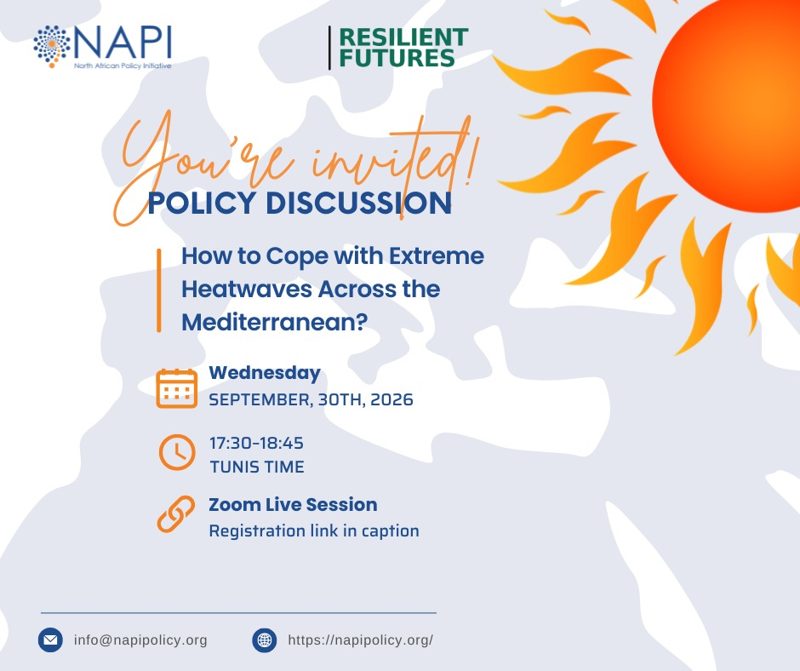
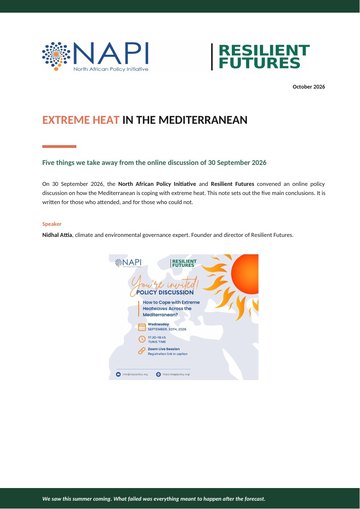
Online dialogue with NAPI, 30 September 2026: the response gap between the two shores, heat as a risk to be governed ahead of time, and three no-cost measures.
Read the note →Resilient Futures produces independent analysis of ecological and climate policy, and equips decision-makers, journalists, students and activists — through analysis, data, advocacy & dialogue.
Online dialogue with NAPI, 30 September 2026: the response gap between the two shores, heat as a risk to be governed ahead of time, and three no-cost measures.
Read the note →

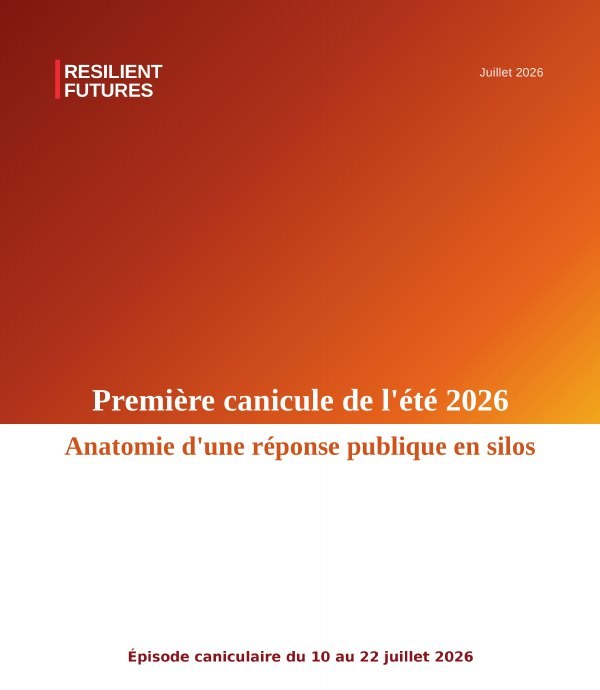
From 10 to 22 July 2026, Tunisia went through an almost continuous heatwave — up to 49–50 °C — that turned into an energy and health crisis. This report dissects a public response that stayed in silos and sets out concrete levers for action, from an interministerial “extreme heat” unit to a National Heatwave Plan.
Read the report →
Seven years of institutional communication examined through 133 references: reactive, fragmented and socially selective.
Read the note →June, July and August 2026 each rank among the hottest months recorded in Tunisia since 1950 — with an all-time record August at 32.3 °C, 3.4 °C above the 1991–2020 climate normal.
Source: National Institute of Meteorology (INM), monthly climate bulletins — June, July, August 2026 (averages over 25 main stations) · Read “L'été des limites” (in French)
Summer 2026 put both shores of the Mediterranean to a hard test: extreme heat hit the region with rare severity and cascading impacts — and yet it was a foreseeable risk. Speaking at NAPI's invitation, Nidhal Attia takes stock of this climate risk, building on Resilient Futures' work on adapting to extreme heat.